Table Of Content
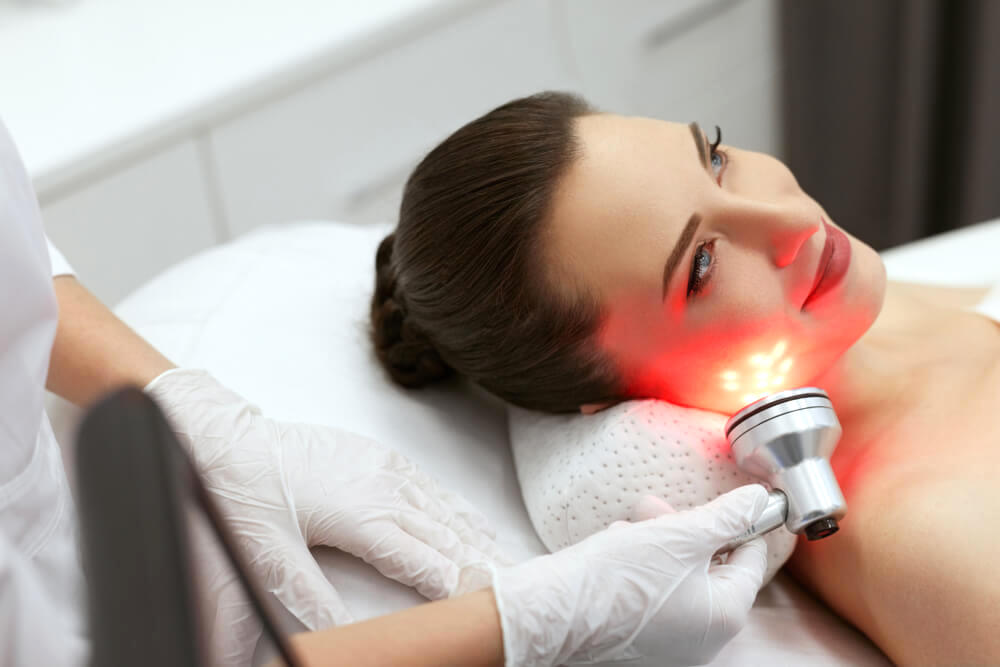
If a provider’s office (like dermatologists) offers the service, it may not be covered by your health insurance and you may have to pay out of pocket like you would at a spa or wellness center. Red light has been used for a variety of reasons, including in the treatment of skin, dental, and inflammatory conditions. Red light therapy uses light in the red or near-infrared region because this wavelength range is the best at getting through tissue. It is also more easily absorbed by the parts of cells that capture light energy.
Types of Red Light Therapy
The 8 Best Hair Growth Devices of 2024 - Town & Country
The 8 Best Hair Growth Devices of 2024.
Posted: Fri, 15 Dec 2023 08:00:00 GMT [source]
Generally, each device will provide safety guidelines based on the dose and power of the LED red light. Dr. Kelley also warns that pregnant women may wish to steer clear for now because red light therapy hasn’t been well studied in relation to pregnancy. Overexposure or underexposure could lead to ineffective treatment or even side effects. If you're exploring treatment options, you might want to ask your provider about trying red light therapy.
Cost and Device Selection
Telogen effluvium is another temporary form of hair loss caused by stress or shock. Here, red light therapy can play a role in speeding up recovery by stimulating follicle activity and promoting new growth faster than normal. A case study showed a woman recovering her full head of hair after regular red light therapy sessions following severe stress-induced telogen effluvium. This article will cover how red light therapy works, what it’s used for, what the evidence says about its potential benefits, the possible side effects and risks, and how much red light therapy treatment costs. If you're interested in red light therapy to treat a skin condition, "discuss it with your dermatologist and try an in-office treatment," says Stevenson. If your social media feed is full of glowing red face masks and crimson saunas, you're not alone.
What are the side effects of red light therapy?
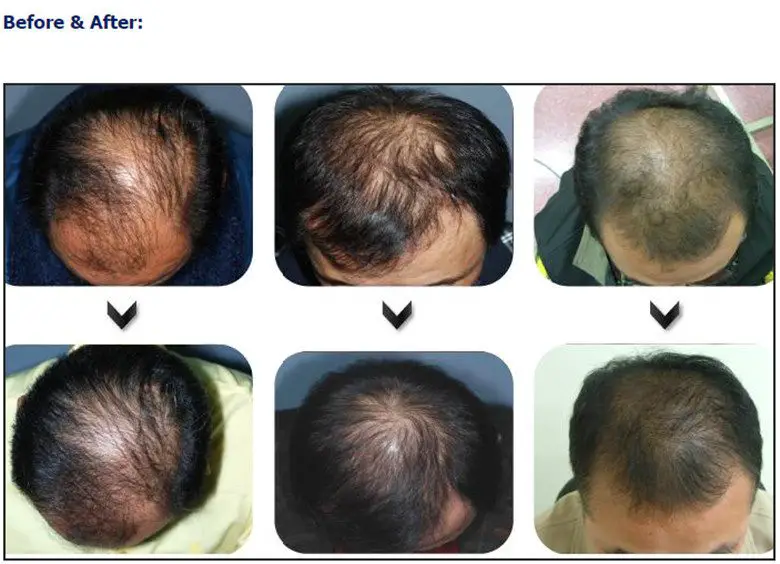
This therapy has shown the ability to effectively treat balding in both men and women with pattern hair loss due to genetics, a condition called androgenic alopecia. While there are many snake-oil treatments out in the world, the effects of red light therapy on your hair are scientifically proven. Numerous studies conducted on thousands of people in total have found that after 3-6 months of sessions, this type of LLLT does indeed stimulate an increase in hair thickness and density [6][7][8]. The amount of time needed to start seeing results from your red-light hair treatments depends very much on the cause of your hair loss and on your overall hair and scalp condition.
LLLT for Hair Growth in Clinical Trials
The most you may feel is some soothing warmth, which should not cause discomfort. Red light is often emitted by therapeutic devices through an arrangement of larger light-emitting diodes (LEDs). The more LEDs the product has, the more light it emits and the faster and more efficient it is. Choosing a low-powered device might yield insufficient amounts of red light for optimum benefit. However, please be advised that not every home product on the market is safe and effective.
OUR PRODUCTS
Red light therapy is a promising treatment that has the potential to change the quality of life for many people facing different medical and cosmetic concerns. Although research is still ongoing, if you feel like red light therapy could benefit you, set up an appointment with a medical professional with experience using the devices to learn more. NASA and QDI’s research illuminates red light therapy’s assistance with healing. “The treatment accelerates wound healing by promoting blood circulation, which improves cellular repair,” says Lamba.
If you feel that your eyes are bothered by the shine, you can feel free to close them and relax during the session. Normally, all you should be experiencing is a soothing, comfortable sensation. If you are worried about the potential side effects of using red light therapy on your hair, you can rest entirely at ease.
What to Expect During a Red Light Therapy Treatment
AGA refers to hair loss in genetically susceptible individuals caused by effects of androgens such as testosterone and its derivative dihydrotestosterone (DHT). Testosterone is a lipophilic compound that diffuses across the cell membrane. Testosterone is converted by the cytoplasmic enzyme 5-α reductase to DHT, which is its more active form.
How to use red light therapy for hair growth
You can even try Minoxidil combined with Finasteride for a stronger approach. Just be sure to get the recommendation of a hair specialist before starting treatment, to be certain you are a good candidate (e.g. Finasteride is not recommended to pre-menopausal women). This is not a disease of the hair or scalp, it is actually a condition which occurs when someone is under great amounts of stress or has suffered significant trauma. It’s widely accepted that the procedure is safe, tolerable, and less invasive than hair transplant surgery.
This concern is understandable, considering that exposure to regular sunlight can increase your risk of skin cancer if not using protection. However, unlike sunlight or tanning beds, red light therapy devices do not emit UV radiation. They are thus safe to use on your skin and scalp without fear of developing melanoma. Unlike androgenetic alopecia, hair transplant for alopecia areata doesn’t usually work, because there is no safe donor area (your antibodies would be attacking the implanted hair follicles as well). The good news is that as science has evolved, researchers have also developed a wide array of solutions to restore your locks to their former glory. One of the least invasive – and completely painless – treatment options available is red light therapy for hair growth.
Red light also has the unique ability to decrease inflammation and bacteria, and even treat pre-cancerous lesions says Zubritsky. Red light therapy is a non-invasive treatment that uses low-level red light to treat various conditions, including hair loss. The incidence of alopecia related to cancer treatments such as chemotherapy is close to 65% and it has severe negative psychological effects [22]. LLLT has been suggested as a treatment modality to promote hair regrowth for chemotherapy-induced alopecia. In a rat model, different regimens of chemotherapy were given to each rat in conjunction with an LLLT device which had the laser unit and switch from the HairMax LaserComb®, but without the comb or handle [52].



No comments:
Post a Comment